How Bedrud’s Collaborative Whiteboard Syncs
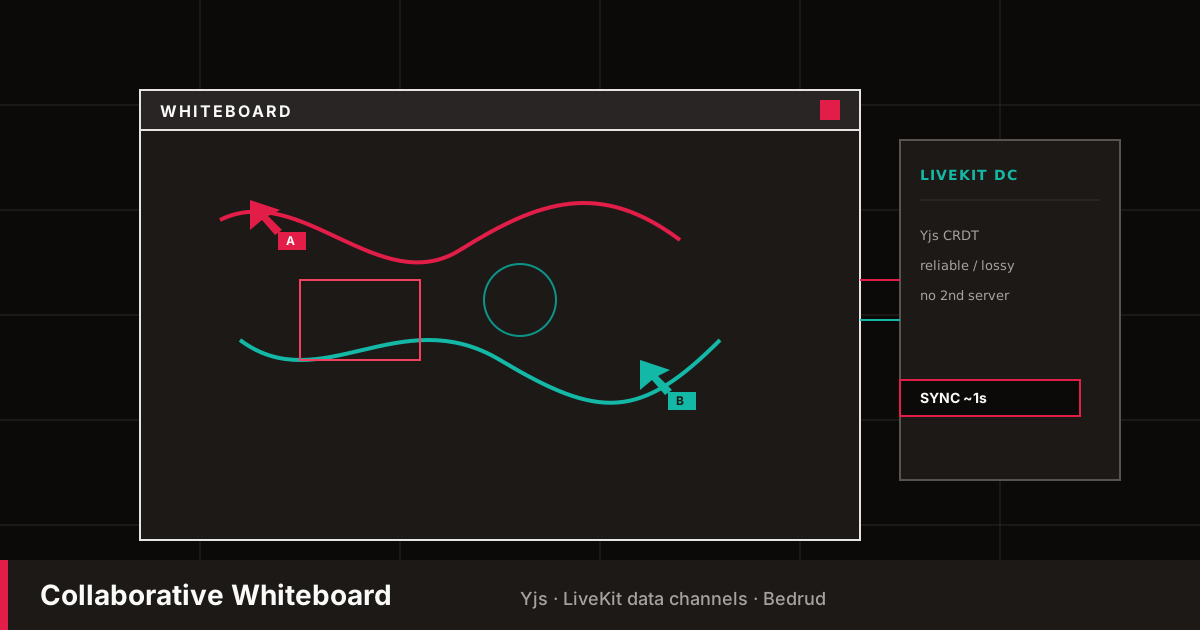
Yjs CRDTs over LiveKit data channels — a shared board without a separate whiteboard server.
Most video stacks bolt on a whiteboard as another SaaS, another WebSocket, another origin to allowlist. Bedrud keeps the board inside the meeting room and reuses the media path you already have: LiveKit data channels.
The product goal
Two (or twenty) people open the same overlay, draw, move shapes, and delete elements. Everyone sees the same scene within about a second. Leaving and rejoining does not strand the UI in a crash loop. Late joiners catch up.
That is the bar we test in our manual guide: multi-user draw, remote select/move/delete, reopen after close, rejoin after leave.
Stack choice
| Piece | Role |
|---|---|
| Canvas UI | Excalidraw-style tooling (vendored in the web app) |
| Shared state | Yjs CRDT document |
| Transport | LiveKit reliable / lossy data channels |
| Media A/V | Unchanged WebRTC tracks |
CRDTs let concurrent edits merge without a central operational-transform server. LiveKit already multiplexes data for chat-style payloads; the whiteboard rides that path so self-hosters do not deploy a second realtime service.
Why not HTTP polling?
Board strokes are high-churn and latency-sensitive. Polling the API would either hammer the Go process or feel sluggish. Data channels:
- Stay in the same participant session as the call
- Avoid extra CORS and cookie complexity for a side service
- Fail and recover with the room connection instead of a separate “whiteboard offline” mode
Chat, stage control messages, and board updates can coexist on the DC layer while SFU media stays on RTP.
Build note for self-hosters
The whiteboard is a code-split chunk in the web client. Production builds must complete (cd apps/web && bun run build) so the vendor chunk is present when someone opens the board. A 404 on that chunk is a packaging bug, not a LiveKit misconfiguration.
Experimental toggle
Shared whiteboard can be gated under Settings → Experimental so hosts can enable it when they want the control bar entry. Documented for end users in Collaborative Whiteboard.
What we are not claiming
- Pixel-perfect cursor lock across continents
- Infinite offline offline-first storage of every board forever
- Server-side durable board history as a first-class product (today the focus is live session sync)
Try it
Deploy Bedrud, enable the experimental toggle if required, open a room in two browsers, and draw. If strokes land for both sides, the DC + Yjs path is healthy.
For the full operator and architecture story of the media plane, see WebRTC Connectivity and Web Frontend.